
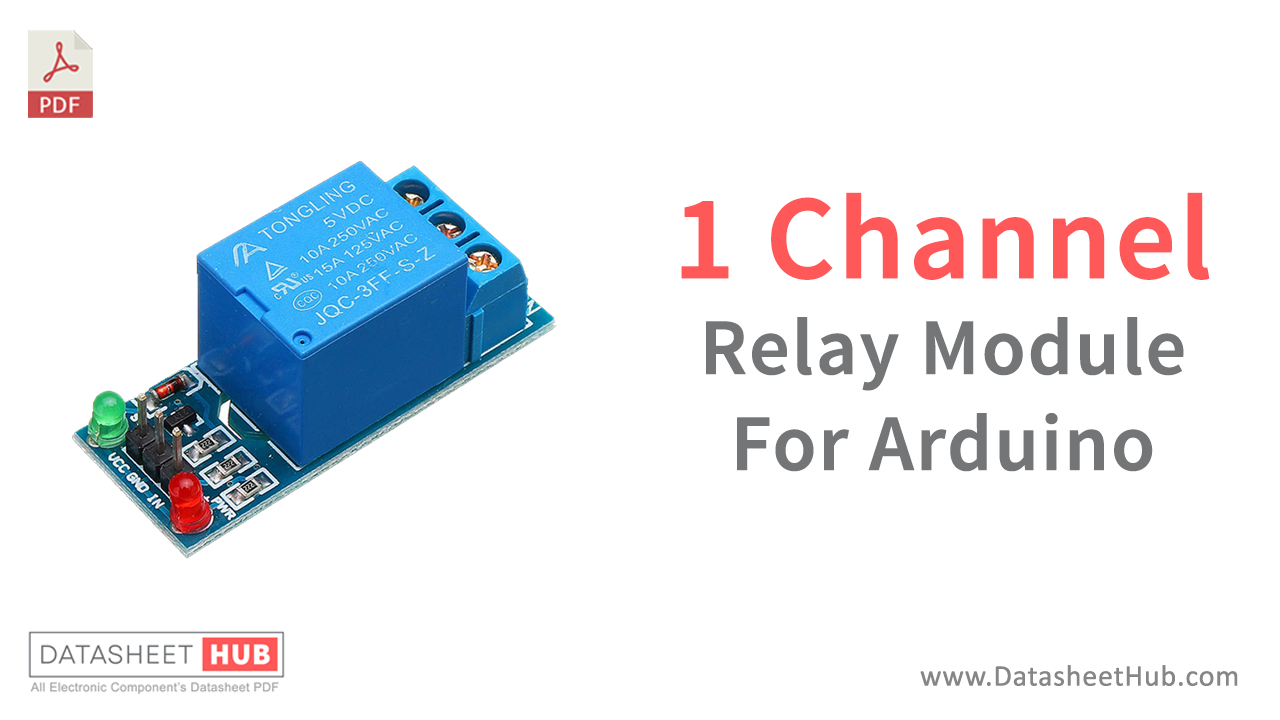
1 Channel Relay Module overview
The 1 Channel Relay Module is a For Arduino. Main ratings: VCC Power interface,5V; GND Ground; IN Control interface.; Drive Current At least 4mA. This page brings together the 1 Channel Relay Module pinout and key specifications, with the full datasheet PDF to preview below or download.
1 Channel 5V Arduino Relay Module for Arduino PIC AVR DSP ARM. Single-channel relay, a wide range of microcontrollers such as Arduino, AVR, PIC, ARM, and so on can control it. The 5V relay module circuit, each one needs a 15mA-20mA driver current and is equipped with a high current relay: DC 30V / 10A, AC 250V / 10A. This one-channel module has a standard interface that can be compatible with a microcontroller.
This 5V Arduino relay module has a high-level and low-level-triggered mode, friends who do not understand, have a look high-level trigger refers to the signal voltage between input and trigger, which can be understood as a signal input with VCC cathode short-circuit triggered away. Low-level trigger refers to the signal voltage between the input terminal and Earth OV trigger, can be understood as the signal input terminal and the GND negative electrode short circuit triggered away 1-channel relay module connection
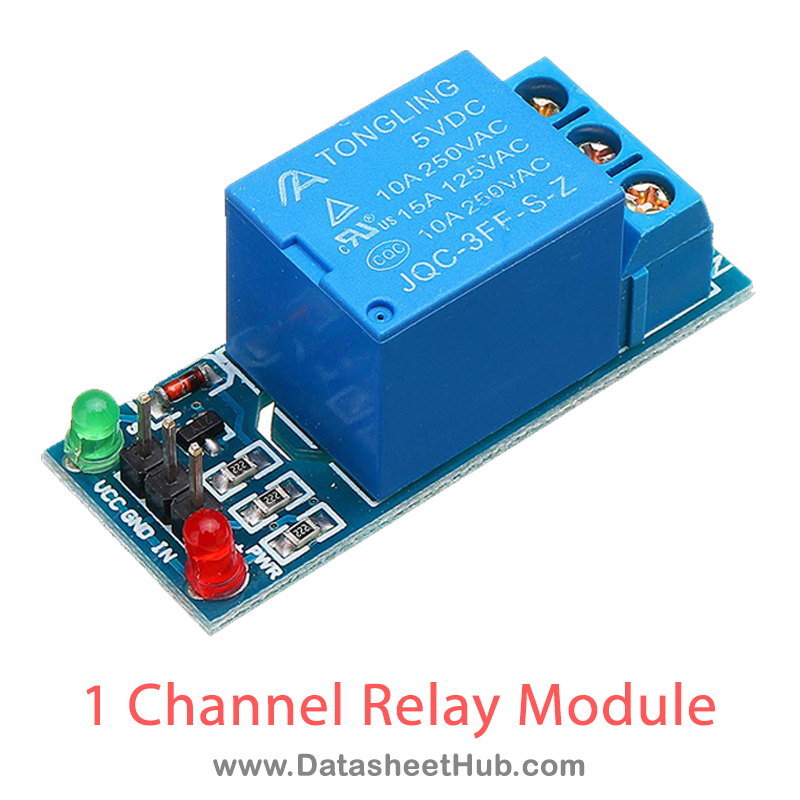
Key specifications
Datasheet
1 Channel Relay Module features
- With an isolation groove in the control area and load area.
- With power and relay action indication, bright when connect and go off when disconnected.
- When there is a signal in signal input, the public side and the common side will break over.
- It can be not only used as a microcontroller development board module but also as a home appliance control.
- It can not only control the DC or AC signal but the 220V AC load.
- With a permanent open and close vents contact.
- It is convenient to connect with the blue KF301 terminal access control cable
1 Channel Relay Module pinout
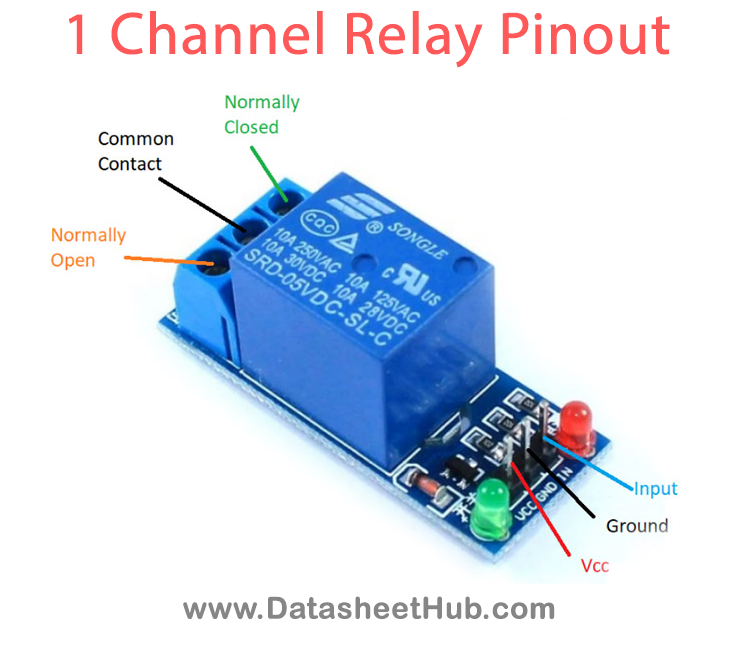
| Name | Description |
|---|---|
| Relay Trigger | Input to activate the relay |
| Ground | 0V reference |
| VCC | Supply input for powering the relay coil |
| Normally Open | Normally open terminal of the relay |
| Common | The common terminal of the relay |
| Normally Closed | Normally closed contact of the relay |
1 Channel Relay Module applications
- Home automation systems for controlling a single appliance, light, or fan
- DIY electronics projects requiring simple switching or control of a single electrical device
- Prototyping and experimentation with Arduino or other microcontroller-based projects
- Controlling small motors or actuators in robotics projects
- Remote control systems for turning on/off a single device or circuit
- Building simple alarm systems or triggering events based on sensor inputs
Comments 0
Leave a comment